Un team misses its quarterly targets. The manager now has three obvious options: tighten control, open a deeper dialogue, or step back and give people more room. Each choice can work, but each can also create new problems. More control may restore focus during a crisis, yet it can weaken initiative. More participation may improve commitment, yet it can slow a decision that cannot wait. More autonomy can bring out expert performance, yet it can expose gaps in clarity and accountability.
A useful lista stili di leadership should therefore do more than label managers as autocratic, democratic, coaching, or delegating. Leadership style is a decision tool. The right choice depends on the task, the team's capability, the motivation of its members, and the urgency of the moment. The historical work of Kurt Lewin, Ronald Lippitt, and Ralph White already showed that directive, participative, and hands-off approaches produce different effects on output, cooperation, conflict, and initiative. Their experiments are summarized in this overview of Lewin's leadership styles.
The ten styles below connect each choice to a practical situation, observable signals, and performance management follow-through. Use them to set objectives, run check-ins, give feedback, and decide whether your current approach is helping the team deliver. For a complementary view of communication and leadership, explore Intonetic's guide to leading in English.
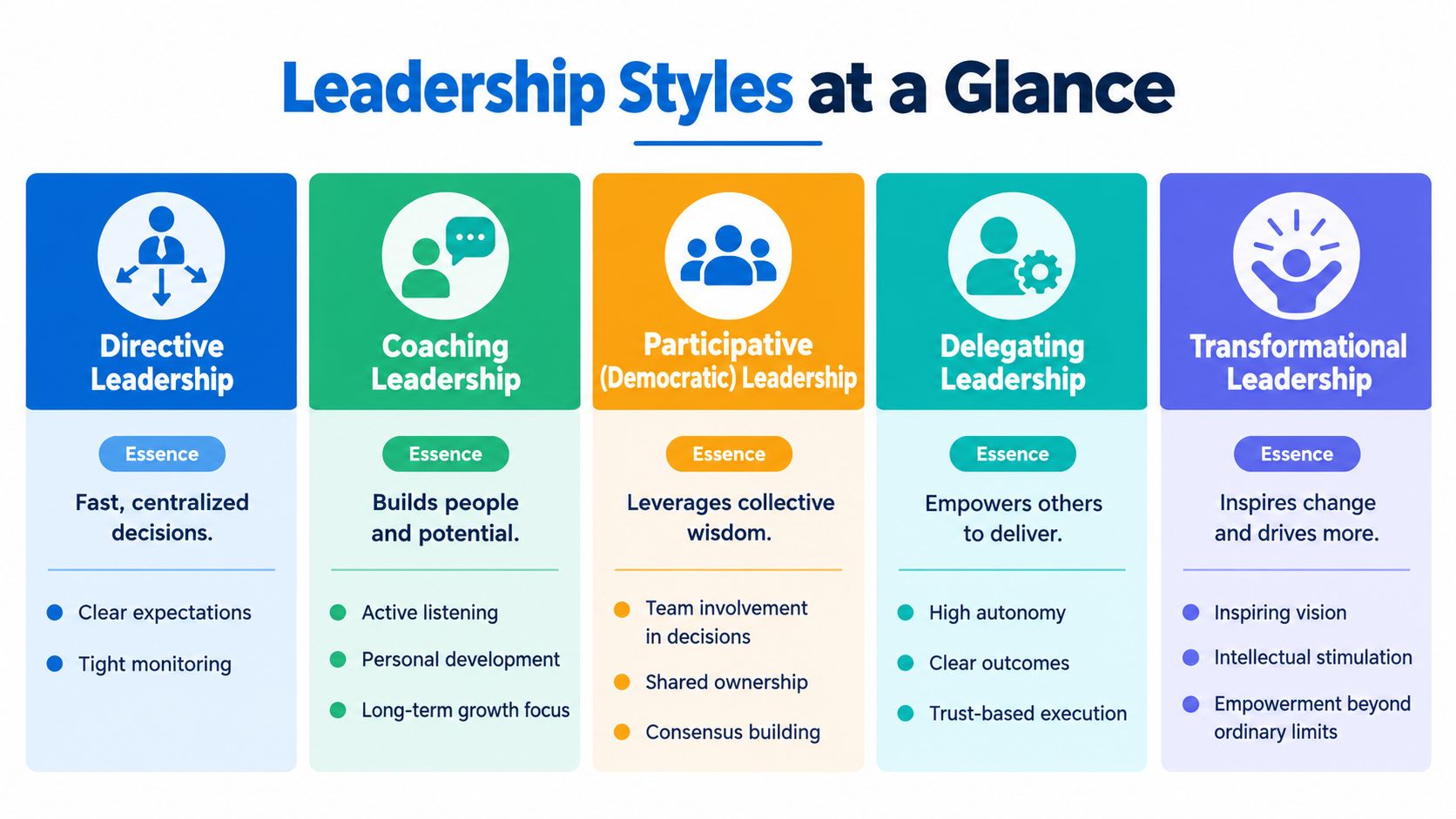
1. Leadership direttivo
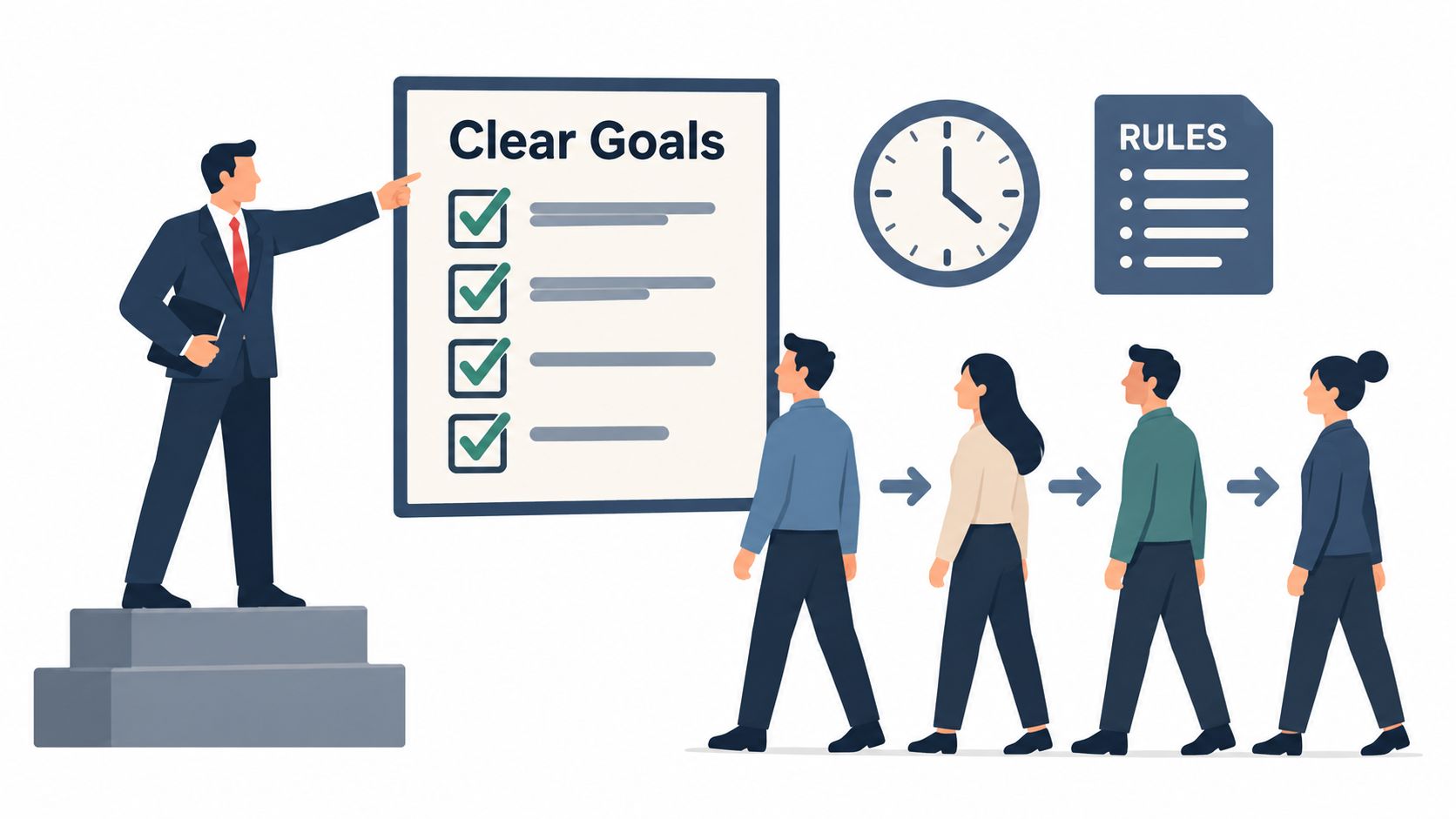
A team has missed two handoffs, the deadline is close, and one wrong move could create a safety or compliance problem. That is the moment for directive leadership. The manager makes the call, sets the standard, assigns owners, and defines how the work will be done. This style fits crisis response, regulated work, early onboarding, and tasks that rely on strict protocols, including healthcare, aviation, and industrial operations.
Used well, directive leadership creates clarity, not fear. The practical test is simple. People should know what matters now, who decides, and what good execution looks like. A new sales team entering an unfamiliar market may need a fixed daily workflow before it can adapt it. A production team running a safety-sensitive process may need repeatable compliance before it earns more discretion.
The trade-off is real. You usually get speed and control first, but you can lose initiative if you hold the reins too long. As noted earlier, Lewin's comparison of autocratic and democratic groups found higher immediate output under close autocratic supervision, but weaker carryover when that supervision was removed.
Practical rule: Use direction to build competence and safety, not dependence.
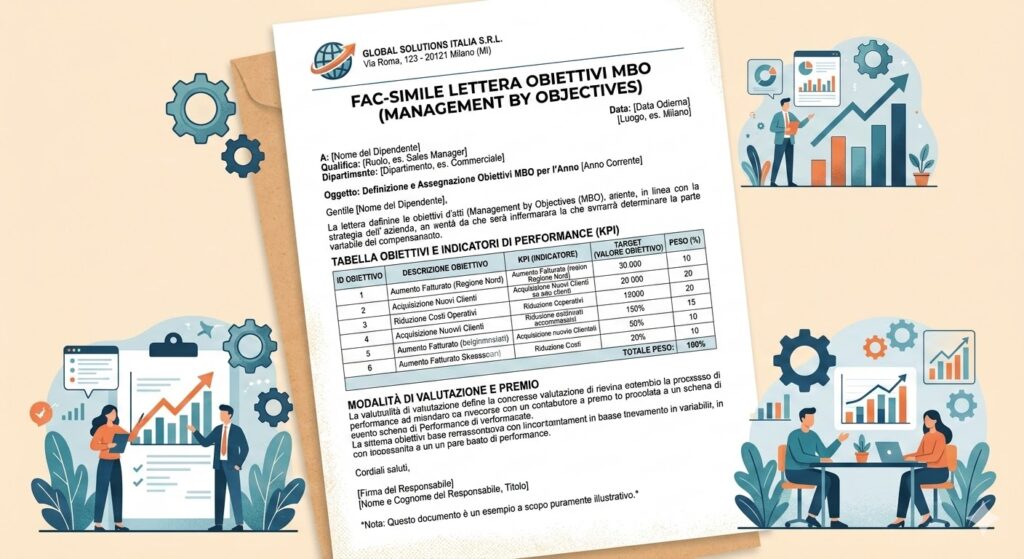
Make the follow-through visible. Set short-term objectives in clear MBO or OKR language. Run frequent check-ins. Give feedback on three points: the action taken, the standard required, and the correction needed next. Watch for signals that the style is working, fewer errors, faster execution, and less confusion about priorities. Then make a decision. If the team performs reliably without constant prompting, reduce control, invite more input, and shift to a style that develops judgment instead of only compliance.
2. Leadership coaching
A coaching leader treats performance as a development conversation, not only as a score. The manager asks open questions, listens for obstacles, and helps each person build the capability to solve similar problems independently. This style fits high-potential employees, new managers, consultants, professional specialists, and growing technology companies where roles change quickly.
Suppose a product manager repeatedly avoids difficult stakeholder conversations. A directive manager might provide a script and require its use. A coaching manager explores the hesitation, observes a real conversation, gives precise feedback, and agrees on a practice goal for the next check-in. The second approach takes more attention, but it can create durable capability.
The evidence supports treating coaching as a distinct set of behaviours rather than a vague attitude. In a meta-analytic review of Multifactor Leadership Questionnaire research, individualized consideration correlated approximately .61 with effectiveness, while intellectual stimulation correlated approximately .60. Charisma correlated approximately .71, contingent reward .41, and management-by-exception .05. These figures come from the review of transformational and transactional leadership effectiveness.
Turn development into a managed process
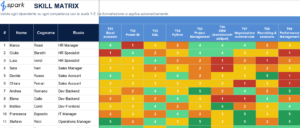
Use structured one-to-ones, record personal development objectives in a skill matrix, and connect gaps to internal training or an LMS. A 360-degree feedback process can add perspectives that a manager alone won't see. Track course completion, evidence of applied learning, and the employee's next level of responsibility.
Spark's Pulse Survey can also help managers check whether employees feel they're developing, rather than assuming that every coaching conversation is useful.
Place the growth conversation inside a real operating rhythm. A monthly objective review, a short skills update, and a concrete behavioural commitment are more useful than a broad promise to “work on leadership.”

A coaching conversation works best when the employee leaves with a decision, a practice opportunity, and a date for review.
3. Leadership partecipativo
A product launch is a common test for participative leadership. Engineering sees reliability risks, support hears recurring complaints, and marketing knows where the message is likely to fail. In that situation, the manager should open the decision, gather the right input, and still make the call. That is what participative leadership is for.
It works best when the team holds information the leader does not have, and when adoption matters as much as speed. Cross-functional projects, agile teams, creative work, technology companies, and startups often fit that pattern. The point is not to make leadership feel inclusive as a personality trait. The point is to improve the decision, build commitment to execution, and make trade-offs visible before work starts.
A software team preparing a major release may spot technical debt that will hurt reliability after launch. A marketing team may hear objections from customers long before those objections show up in a report. Good managers use that input early. Poor ones ask for opinions, leave the decision open, and create drift because nobody knows what was agreed, who owns it, or when execution starts.
Historically, democratic leadership has been associated with stronger cooperation, morale, and more consistent contribution than more top-down or hands-off approaches, especially when the leader is not present. The practical lesson is simple. Participation should strengthen judgment, not dilute accountability.
Keep participation accountable
Use a clear method for input. A Design Thinking session, a retrospective, or a short structured review can all work if the scope is defined. Record the decision, the rationale, the owner, and the related objective. Then check whether the choice is working through short follow-ups, not by reopening the same debate every week.
Voice also needs a formal route into decisions. This overview of employee representation systems is useful for that reason.
Participation earns trust when people can see how their input affected the outcome, even when the final decision isn't their preferred option.
Measure the result and the process. Track progress against goals, friction in the decision cycle, follow-through on actions, and feedback on whether people felt heard. Participative leadership works when involvement produces a better decision and clear ownership after the meeting ends.
4. Leadership delegante
The team is experienced, the work is moving fast, and waiting for your approval would slow everything down. That is the moment for delegating leadership. It works best when people already have the judgment to choose methods, sequence work, and solve problems without constant supervision. Senior specialists, mature teams, distributed organisations, research groups, consultants, and scale-ups with experienced managers usually fit this model. The leader still owns the outcome. The choice is to hand over execution authority, not accountability.
A strong engineering team, for example, can set architecture, delivery order, and testing approach without asking the director to sign off each step. That often improves speed and ownership. It breaks down when priorities are vague, dependencies are hidden, or the manager withdraws and calls it autonomy.
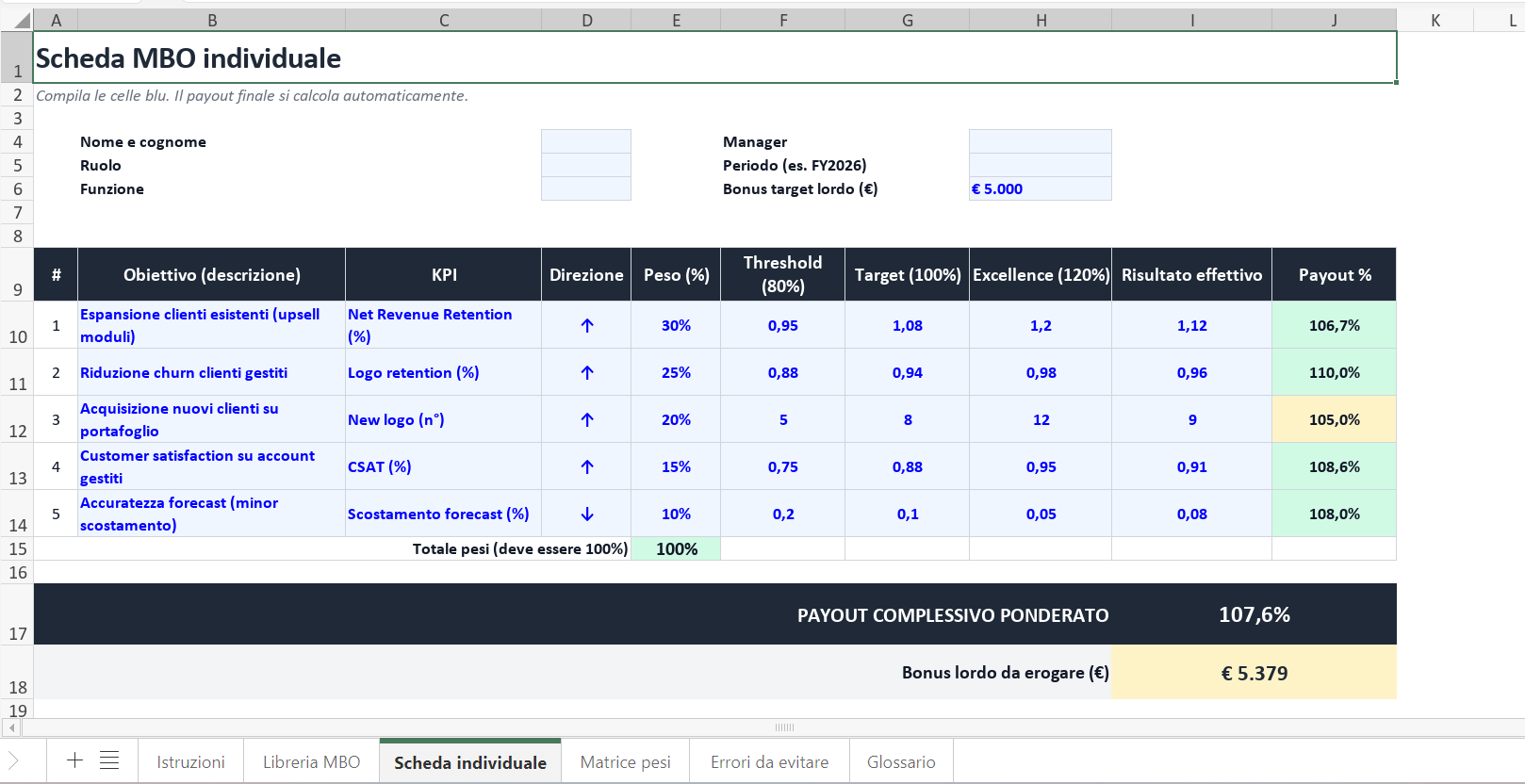
Delegation is a management system, not a personality trait. Set the objective, the boundaries, the decision rights, and the escalation triggers at the start of the cycle. Use OKRs and KPIs if they help the team see what good looks like. Then keep check-ins light and regular. A self-service dashboard is useful because people can track progress and risks without turning every update into a status meeting. Feedback should stay tied to outcomes, quality, collaboration, and risk handling.
If you want a practical model for building autonomy without losing control, see our guide to empowerment in leadership.
Know when delegation is working
The signals are usually clear. Work ships reliably. Problems are raised early. Trade-offs make sense. Peers hold each other to the standard. If targets are met but risks stay hidden, delegation is not working well. If every small decision still comes back for approval, authority was never really transferred.
Use incentives that reward ownership and sound judgment, not just visible busyness. Pair that with regular check-ins, clear alerts on material deviations, and direct feedback when the team drifts from the strategic priority. Delegation works when people control the work and the leader still protects the few decisions that cannot be handed off.
5. Leadership trasformazionale
A company has to shift its model, reset habits, and ask people to work in ways that once felt unnecessary. That is the point where transformational leadership helps. It gives the team a reason to change, links daily choices to a larger direction, and makes development part of execution. It fits moments such as digital transformation, cultural change, sustainability commitments, or a move to a different business model.
Take a founder moving from project-based work to recurring revenue. The job is not to deliver a speech and hope people follow. The leader has to spell out why the change matters, which behaviours now count, and how progress will be judged. Then the management work starts. Set objectives that tie each role to the shift. Create room to test new approaches. Use feedback to separate useful learning from avoidable mistakes.
Research points in the same direction, with limits. Aga, Noorderhaven, and Vallejo's study reports a meta-analysis of 64 effect sizes from 41 primary studies and found a stronger positive association between transformational leadership and project success than transactional leadership, while also showing that results vary by project size and type. The practical lesson is clear. Use this style where the work calls for change and commitment, not as a default for every team. See the meta-analysis of leadership and project success.
Make the vision measurable
Treat this style as a decision tool. If people can repeat the vision but cannot turn it into priorities, it is not working. Put the “why” into team and individual OKRs. Define what evidence earns more investment in a new idea. Check-ins should test decision quality, not just enthusiasm.
Development matters here because behaviour has to change in public, under pressure. Practical support such as coaching, feedback routines, and role-specific learning usually works better than one-off inspirational events. Our resources on managerial training are useful when you need managers to translate vision into daily management habits.
Keep the style honest with performance management. Reward initiative, but keep deadlines, quality standards, compliance, and contingent rewards in place. If energy rises but execution gets loose, the vision is outrunning the system.
6. Leadership situazionale
Situational leadership treats style as a response to capability, motivation, risk, and time pressure. The same employee may need direction during onboarding, coaching after a difficult assignment, participation when shaping a new process, and delegation once competence is proven. A fixed label can't capture those shifts.
Consider a mixed-seniority customer-success team. A new hire may need scripts, shadowing, and close review. An experienced account manager may need only a target, customer context, and authority to choose the approach. Applying the same level of control to both people creates either unnecessary friction or dangerous gaps.
Goleman's framework examined coercive, authoritative, affiliative, democratic, pacesetting, and coaching styles. His analysis linked each style to organisational climate factors such as flexibility, responsibility, standards, rewards, clarity, and commitment. The study on leadership styles that get results found that authoritative leadership had the most positive overall climate effect, while coercive and pacesetting approaches were more useful in limited circumstances and could damage climate when overused.
Move people toward autonomy
Assess each person's current competence and motivation. Explain when and why your approach is changing, set progressive autonomy milestones, and record the evidence behind the change. Regular check-ins should focus on progress toward independent performance, not merely on whether the employee followed instructions.
The best situational leaders are consistent in standards even when they vary in behaviour. They don't make one employee guess why a manager is directive today and hands-off tomorrow. They explain the context, the expected result, and the next signal that will justify more freedom.
7. Leadership servizievole e inclusiva
Servant and inclusive leadership puts the leader's attention on the conditions that allow people to contribute, grow, and belong. It combines listening, practical support, mentoring, fair access to opportunity, and deliberate inclusion of different perspectives. This style fits organisations with a strong wellbeing focus, social enterprises, B-Corps, remote teams, nonprofit organisations, and companies with active mentoring or Employee Resource Groups.
A remote team may look productive in a dashboard while some employees remain excluded from decisions made in informal conversations. A servant-inclusive leader checks who gets heard, who receives development opportunities, and which barriers prevent people from meeting their objectives. Support isn't indulgence. It means removing avoidable obstacles while preserving clear standards.
A meta-analysis of 112 studies and 39,433 participants compared 11 leadership practices across seven categories of organisational, team, managerial, and individual outcomes. Ninety-six percent of the correlations between leadership practices and outcomes were statistically significant, while approximately half of the relationships were moderated by organisational type, including for-profit businesses, nonprofits, education, healthcare, and public administration. The meta-analysis indexed by the Education Resources Information Center supports a contextual approach rather than one universally superior model.
Measure care without reducing people to numbers
Use engagement and wellbeing pulse surveys, inclusion feedback, promotion and development reviews, and evidence of mentoring access. Track whether managers respond to concerns and whether agreed actions close. Diversity metrics can reveal patterns, but managers must also examine the experiences behind those patterns.
Make accessibility and psychological safety part of team routines. Invite dissent, rotate meeting roles, and make important information available to people who aren't present in informal channels. A leader who serves the team still makes difficult decisions. They make those decisions with a broader view of who carries the impact.
8. Leadership laissez-faire
A senior specialist team can stall even with strong talent. Nobody is blocked on paper, but decisions sit, dependencies slip, and each person optimises their own lane. This is the true test of laissez-faire leadership. It is not a personality label. It is a choice to step back when the team can direct more of its own work.
This style fits experienced researchers, senior consultants, specialised creative teams, open-source contributors, and innovation groups where exploration matters. It fails when a manager uses distance to avoid priorities, conflict, or resource calls.
A research lead might set the problem, provide tools, and leave method choices to the experts. In that setting, autonomy can improve the work. Give the same freedom to a new project team with unclear ownership, and performance usually gets worse. As noted earlier, classic work on leadership styles linked laissez-faire approaches with weaker coordination and lower productivity than the other styles studied.
Autonomy still needs boundaries
Use this style as a decision tool. Set the outcome, constraints, decision rights, resources, and escalation path before stepping back. Then make the follow-through visible. Short check-ins, clear objectives, peer review, and self-serve dashboards help a team stay honest without constant manager intervention.
The signals matter. Watch for missed handoffs, duplicate work, slow decisions, uneven effort, and people who cannot say what success looks like. Those are not signs of healthy freedom. They show that support has gone missing.
Freedom works only when people know what they own, what they must deliver, and when they need help.
Incentives should reward responsible ownership, knowledge sharing, and results. Feedback should test judgment, not just output. If the team cannot self-regulate, add structure early. Waiting too long turns autonomy into drift.
9. Leadership basata su dati e metriche
Data-driven leadership uses evidence to set priorities, review performance, identify trends, and correct course. It's valuable in finance, insurance, e-commerce, sales, technology, and any organisation where teams manage clear operational outcomes. A sales leader can compare pipeline quality, conversion patterns, and target progress. A finance leader can test whether a process is producing the expected control result.
The danger is metric fixation. A team may hit a volume target while damaging quality, customer trust, or collaboration. A dashboard can show what happened, but it can't automatically explain why it happened or whether the measure still represents the intended outcome.
For a practical explanation of the concept, see what data-driven means in management. Use SMART objectives where appropriate, but balance quantitative indicators with qualitative evidence such as customer feedback, peer input, ethical conduct, and learning.
Make measurement trustworthy
Explain the logic behind every KPI, who can access the data, and how employees can challenge an inaccurate assessment. Use alerts to start a conversation, not to issue an automatic verdict. AI-assisted recommendations can help managers identify patterns, but judgment about context, fairness, privacy, and development must remain human-led.
The same principle matters in performance reviews. A manager should ask whether an employee had the resources, decision rights, and workload required to influence the result. Reward ethical methods as well as outcomes, or employees will optimise the metric at the expense of the organisation.

10. Leadership resiliente e agile
Resilient and agile leadership helps teams make decisions under uncertainty without losing their sense of direction. The leader adapts strategy, learns from failure, communicates calmly, and protects psychological safety while pressure rises. This style suits startups, scale-ups, digital transformations, fintech, e-commerce, and teams navigating disruption or serious operational shocks.
An agile leader doesn't change priorities randomly. They preserve the mission and values, then adjust the plan as evidence changes. A product team may stop investing in a feature after customer feedback, run a smaller experiment, and review the learning in a retrospective. The leader's job is to prevent that change from becoming a personal blame exercise.
A meta-analysis of leadership and work engagement found an overall correlation of r = 0.47, classified as medium in size. Transformational, authentic, supportive, ethical, and servant leadership all showed significant positive associations with engagement, while positive leadership styles collectively explained 22.09% of the variance in engagement. The meta-analysis on leadership and employee engagement also found variation among styles, with ethical leadership explaining the largest share in that sample.
Build a learning rhythm
Use short decision cycles, regular retrospectives, and clear communication about strategic rationale. Celebrate useful learning from failed experiments, but distinguish intelligent risk from neglected preparation. Pulse surveys can reveal whether people feel safe raising concerns before problems become crises.
Track delivery reliability, adaptation quality, employee wellbeing, and the speed with which teams act on lessons. Resilience isn't endless endurance. It's the capacity to recover, learn, and make a better next decision.
10 Leadership Styles Comparison
| Style | 🔄 Implementation Complexity | ⚡ Resource Requirements | 📊 Expected Outcomes | 💡 Ideal Use Cases | ⭐ Key Advantages |
|---|---|---|---|---|---|
| Leadership Direttivo (Directive) | Low, centralized, rule-based process | Low–Moderate, leader time for close monitoring | Fast decisions, clear compliance and execution | Crisis, regulated environments, onboarding inexperienced teams | Rapid decision-making; clear accountability |
| Leadership Coaching | Medium–High, ongoing 1:1s and mentoring routines | High, significant leader time, training, LMS | Improved skills, engagement and retention (medium–long term) | Talent development, leadership pipeline, growth-stage firms | Builds capability and long-term engagement |
| Leadership Partecipativo (Democratic) | Medium, structured participation and facilitation | Moderate, facilitation, longer meetings, feedback tools | Better decision quality and buy‑in; slower cadence | Cross‑functional teams, creative orgs, agile startups | Higher ownership and diverse perspectives |
| Leadership Delegante (Delegating) | Medium, set outcomes, light oversight | Low–Moderate, clear KPIs, dashboards, trust | High autonomy, faster execution, leader freed for strategy | Senior/expert teams, remote teams, scaling orgs | Maximizes ownership and scalability |
| Leadership Trasformazionale (Transformational) | High, vision articulation and cultural work | Moderate–High, communication, development programs | Strong engagement, innovation, long‑term performance | Major transformations, purpose‑driven orgs, culture change | Inspires breakthrough performance and leaders |
| Leadership Situazionale (Situational) | High, continuous diagnosis and style switching | High, leader skill, assessment tools, training | Tailored effectiveness per person/context | Heterogeneous teams, dynamic environments, onboarding mixes | Flexible, individualized effectiveness |
| Leadership Servizievole e Inclusiva (Servant & Inclusive) | Medium–High, ongoing inclusion and support processes | High, time, training, ERGs, wellbeing programs | Improved wellbeing, retention and diversity outcomes | People‑centric orgs, non‑profits, remote teams | Builds trust, equity and strong employer brand |
| Leadership Laissez‑Faire | Low, hands‑off, minimal leader intervention | Low leader resources but requires highly competent team | High autonomy and creativity; risk of misalignment | R&D labs, senior consultants, creative teams | Enables creativity and full ownership |
| Leadership Basata su Dati e Metriche (Data‑Driven) | Medium–High, define KPIs and analytics workflows | High, data infrastructure, analytics skills, dashboards | Objective decisions, faster course‑correction and accountability | Performance‑driven firms, finance, e‑commerce, sales | Evidence‑based decisions and transparency |
| Leadership Resiliente e Agile (Resilient & Agile) | Medium–High, agile rhythms plus resilience practices | Moderate, training, retrospectives, wellbeing support | Faster adaptation, continuous learning, reduced anxiety | Startups, VUCA environments, post‑crisis recovery | Enhances adaptability and rapid learning |
Match the style to the moment, then measure what changes
A leadership style becomes useful only when it helps a manager make a better decision. Start by naming the situation without softening it. Is the team facing a safety risk, an urgent customer problem, a capability gap, a strategic transition, or a need for innovation? The answer narrows the range of styles that make sense.
Next, assess the team's maturity and the pressure around the work. A new employee learning a regulated process may need directive leadership. A senior expert solving an unfamiliar research problem may need delegation or laissez-faire autonomy. A cross-functional group that must commit to a difficult change may need participation before the leader makes a clear decision. A business transformation may need a transformational narrative, but it still requires objectives, owners, and review dates.
Do not confuse the style with the personality of the manager. A calm manager can be directive in an emergency. A naturally decisive manager can use coaching during development conversations. Situational leadership is often the practical answer because capability, motivation, risk, and urgency change over time.
Use a repeatable operating routine:
- Name the decision: State what the team must accomplish and what makes the moment difficult.
- Choose the behaviour: Decide how much direction, support, participation, or autonomy the situation requires.
- Set the evidence: Define the objective, KPI, quality standard, or behavioural signal that will show whether the approach is working.
- Schedule the check-in: Agree when the manager and employee or team will review progress, obstacles, and new information.
- Close the feedback loop: Record what changed, what the person learned, and whether the leader should increase or reduce control.
- Review the incentives: Confirm that rewards support the intended behaviour, including collaboration, ethical methods, knowledge sharing, and responsible ownership.
Measurement should include more than immediate output. Lewin's findings showed that productivity can depend on the leader's physical presence. Goleman's work connected leadership styles with organisational climate, including flexibility, responsibility, standards, rewards, clarity, and commitment. A public-sector meta-analysis found a positive average relationship between leadership and beneficial outcomes, with ρ = 0.380 and a 95% confidence interval from 0.347 to 0.413, while the relationship with negative outcomes such as intention to leave was negative, at ρ = −0.196 with a 95% confidence interval from −0.254 to −0.136. These figures are reported in the meta-analysis of leadership in the public sector.
The review should cover goal attainment, delivery reliability, quality, engagement, development progress, retention, and employee voice. In knowledge-sharing work, transformational leadership was associated positively with both explicit and tacit knowledge, while authoritative leadership had a significant effect on explicit knowledge sharing, with β = 0.132 and p < 0.001**, but not tacit knowledge sharing, with **β = 0.043** and **p > 0.05. The study on leadership and knowledge sharing also identified trust as a mediator between authoritative leadership and knowledge sharing. That distinction matters when a manager wants information to move through a team, not merely to be documented.
Review the chosen style each quarter. Teams gain skills, objectives change, and pressure rises or falls. A directive approach that was appropriate during onboarding may become restrictive later. A delegating approach that worked for a senior team may need more structure after a reorganisation. Quarterly review doesn't mean changing style for novelty. It means checking whether the behaviour still fits the work and whether the signals support continuing it.
The strongest managers build a portfolio of behaviours. They give clear direction when safety or urgency requires it, coach people toward capability, invite participation when commitment matters, delegate to experts, use data without turning employees into dashboards, and protect inclusion and learning during change. The question isn't which label sounds best. The question is what the team needs now, what the manager will do, and how both will know whether it worked.
Spark helps HR and managers turn these leadership choices into measurable objectives, recurring check-ins, feedback, 360-degree reviews, skill development, pulse surveys, and incentive workflows. Visit Spark to connect leadership behaviour with performance data while keeping development, engagement, and accountability in the same system.